Why an Employee Training LMS is Key to Long-Term Employee Engagement and Retention
The research is clear: 94% of employees would stay longer if their company invested in their careers. Discover how a customizable employee training LMS makes all the difference in influencing employee engagement and retention.
May 7, 2026
Employee engagement in the workplace is dropping.
Research from Perceptyx shows a significant shift in the traditional drivers of employee engagement: “employees are increasingly evaluating organizational credibility, stability, and leadership effectiveness—not perks, morale programs, or managerial support.”
Structured workplace learning does more than improve skill sets; it builds trust with employers and a sense of belonging. As technology shifts and engagement suffers, a strategic learning and development (L&D) program is more critical than ever for staying competitive and limber.
When you deliver meaningful growth opportunities, your team can adapt, stay agile, and stay more passionate about their work.
Keep reading, and we’ll cover how a custom-built LMS platform impacts employee engagement and retention, and the best ways to shape a learning and development program for your enterprise team.
What is an Employee Training LMS?
An employee training LMS (learning management system) is a digital learning platform that streamlines internal learning and development. The best systems do more than force employees to complete mandatory training; they guide them through lessons that actually matter to them.
With access to tailor-made course paths, career-specific lessons, gamification, and community knowledge, employees feel stronger connections to their work. This combats disengagement, improving both employee education and retention rates.
How Learning Drives Employee Engagement and Retention
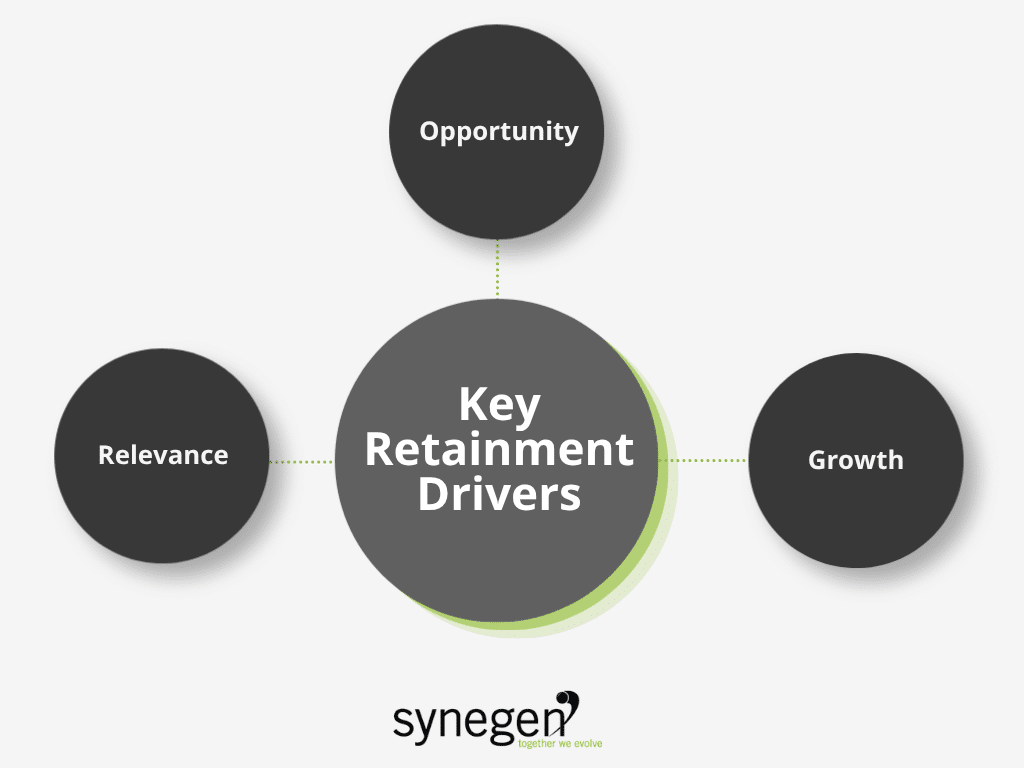
That’s why it’s so important to support your team with the right training system. The best LMS platforms for employee learning directly support their top values: opportunity, growth, and relevance.
LMS platforms enhance what makes businesses unique. It’s all about balance and customizability. When you can tailor different menu options, dashboards, reports and filters, and user groups, offering truly personalized learning experiences isn’t a hassle.
With an LMS platform like Totara Learn, businesses choose how they balance qualitative and quantitative skills assessments. Plus, managers can track learning progression, customize pathways per learner, and effectively manage compliance. Even more, they can introduce informal workspaces, where employees can engage in social learning conversations.
A blend of structured workplace learning and flexibility translates into strong business performance.
Here’s how learning contributes to that growth:
- It builds confidence and competence: Employees gain skills that help them perform better in their current roles and prepare for future ones.
- It creates clarity and direction: Purposeful learning aligned with career pathways shows employees how to advance.
- It connects people to purpose: When learning is tied to the company mission or team goals, it reinforces a sense of meaning at work.
- It signals value and investment: When an organization invests in development, employees feel supported and seen, increasing both loyalty and psychological safety.
Purposeful learning opportunities satisfy both practical and emotional needs.
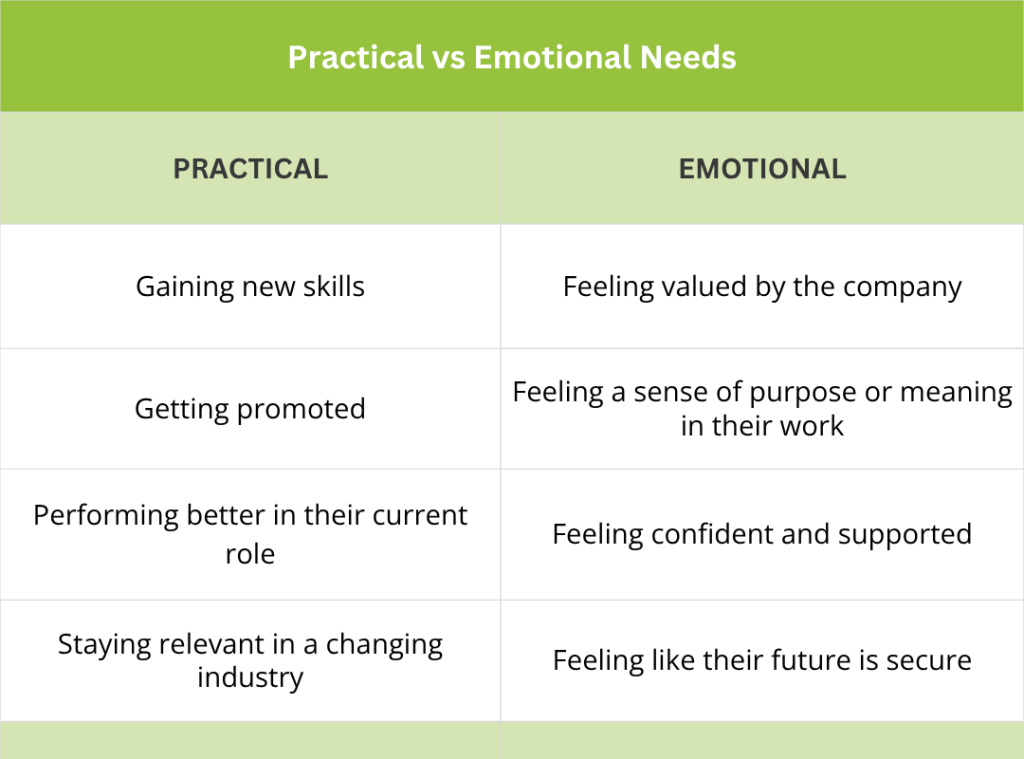
When learning meets needs in a personalized and intentional way, it becomes one of the most powerful levers for boosting engagement and retention.
Barriers That Get in the Way of Employee Engagement and Retention
While the benefits of learning are clear, many organizations still struggle to turn good intentions into meaningful impact. If learning isn’t personalized, accessible, or tied to career progression, even the best programs can fall flat.
Here are some of the most common barriers that get in the way of building learning programs that truly engage and retain employees.
1. One-size-fits-all training that feels irrelevant
If everyone receives the same content regardless of their role, skill level, or career goals, nine times out of ten, it doesn’t speak to what they actually do or want. If training doesn’t feel useful, people tune out. Disengaged learners quietly become disengaged employees.
2. No clear link between learning and career progression
If employees can’t see how training helps them grow, get promoted, or take on new responsibilities, it just feels like another box to check. They won’t commit to learning if it doesn’t lead somewhere. Even more, when growth feels uncertain, they might start looking for employment elsewhere.
3. Siloed systems
Learning happens in one system. Performance discussions occur in another. They don’t talk with each other, so no one tracks whether learning is making a difference or how goals relate to it. Managers don’t see learning progress, they can’t reinforce it or recognize it, and learning becomes invisible and undervalued.
4. Employees unaware of the opportunities available to them
People don’t know what training is offered, how to access it, or what it could lead to because it’s either spread across multiple systems or buried in one cumbersome platform. When accessing, tracking, and finding learning opportunities become a challenge, employees get frustrated, resulting in disengagement.
Using Technology to Deliver Personalized, High-Impact Learning
If you’re using a learning management system just to deliver content, you’re not taking advantage of its full capabilities. An employee training LMS is most powerful when it connects the right content to the right person at the right time, and makes learning feel like a stepping stone, not a speed bump.
Here are several ways to use your learning platforms to drive employee engagement through meaningful, personalized, and goal-oriented learning experiences.
Use AI to Recommend Relevant Learning Based on Role, Goals, and Gaps
AI can be leveraged within an LMS to analyze an employee’s job, past training, and skills gaps to suggest personalized training. Think Netflix, but for professional development.
Automate Nudges and Reminders to Re-Engage Learners Over Time
If learners start strong and then drop off, automated email reminders can gently reengage them. Training stays top-of-mind, without manual follow-ups or oversight from managers.
Integrate Learning Platforms with Performance Tools to Track Progress
Connecting your LMS with performance systems (like OKRs, reviews, or HRIS) directly ties it to actual goals and performance outcomes. Don’t know which metrics you should track? Check out our 35 can’t-miss metrics for LMS analytics!
Recognize Learning Milestones
Digital badges, certificates, and public recognition give employees a sense of achievement. An employee training LMS can award learners automatically, positively boosting morale and job performance.
Build Custom Dashboards for Employees and Managers
Bespoke workspaces are one of the best ways to personalize employee learning experiences. You choose what to showcase: relevant courses, certifications, and progress front and center. When learners log in, they’ll have immediate access to their training materials and opportunities.
Make Learning Collaborative
Learning should be accessible. The best LMSs make it easy for managers and peers in similar roles to create learning playlists. These bundle courses and related materials into one easy-to-share package. This system helps internal knowledge flourish.
Need help consolidating and maximizing your e-learning technology stack? Synegen is an enterprise EdTech expert.
Don’t just take our word for it. We reinvented Red Hat Academy’s learning journeys. Red Hat struggled to accommodate learners while experiencing large company growth. They needed a multi-month learning program with clear paths, assets, and activities. Our team developed an open-code learning experience platform, connecting it to external systems while improving learning experiences for all users. The tool has been globally adopted, spanning all major regions across 80 different countries!
Tesh Patel, Director of Learning Technology and Platform, shares, “We were fortunate to find a partner in Synegen that was able to leverage the openness of Totara Learn’s API, and help us build an open learning experience platform that will continue to deliver value to the business.”
Questions to Consider When Maximizing Your Employee Training LMS
Building a workforce that’s truly engaged and committed relies on a learning ecosystem that does more than simply deliver content. Your employee training LMS must intentionally support key retention drivers: opportunity, growth, and relevance.
As you weigh your e-learning technology, business priorities, and employee needs, these questions can help you evaluate how well they align with engagement and retention.
1. Learning Accessibility
Platform Access
- Are our learning platforms intuitive and accessible across all devices and locations?
- Do employees have seamless single sign-on access to all relevant learning resources?
Content Alignment
- Is learning integrated with performance management and business objectives through our systems?
- Are learning pathways clearly mapped to role expectations and organizational priorities?
- Do we have visibility into how training correlates with key business metrics?
Learner Re-engagement
- Do automated nudges or reminders re-engage learners who fall off?
- Are managers equipped with dashboards and tools to coach employees on learning progress?
2. Platform Capabilities
Skills Management
- Are competency frameworks and skill taxonomies embedded in the employee training LMS to guide development?
- Do we offer micro-learning or bite-sized modules that target specific skill gaps?
Learning Signals
- Are we capturing detailed learning data (completion, time spent, assessments) and linking it to performance?
- Can managers and leaders access real-time dashboards to identify high-potential talent or at-risk employees?
Multi-System Integrations
- How well integrated are our LMS, HRIS, and performance systems?
- Does our technology support scalability and customization for different teams or geographies?
- Are automation and AI capabilities utilized to reduce manual oversight and personalize learning?
3. Employee Support and Enablement
Personalized Curriculum
- Is the platform adaptive to individual learner needs and learning styles?
- Is the platform accessible via a mobile app?
Leadership Development
- Are managers incentivized and trained to actively support and model continuous learning?
- Do leadership teams regularly communicate the strategic importance of learning?
Employee Longevity
- Are learning and development opportunities clearly linked to career paths and promotion criteria?
- How often do we review and update learning programs to keep pace with business changes?
4. LMS Experience
Learning Discovery
- Does the LMS provide intelligent search and AI recommendations tailored to each employee?
- How easy is it for employees to quickly identify the most relevant learning resources?
Employee Development
- Do we offer a mix of modalities (e.g., eLearning, virtual instructor-led, peer learning) that suit different needs?
- How do we ensure the learning content stays current and aligned to evolving skills requirements?
Content Delivery
- Is learning integrated into daily workflows and tools to encourage immediate application?
- How are certifications, badges, or milestones automatically tracked and celebrated?
5. Continuous Development
Purpose
- Are employees aware of how their development contributes to organizational impact?
- Do we incorporate real-world scenarios and projects that reinforce purpose-driven learning?
Learning Progression
- Are employees able to track their development journey with transparent milestones?
- Do we provide regular progress reports that highlight skills growth and achievements?
Sense of Belonging
- Does our platform support social learning features, such as discussion forums, communities, or mentorship?
- How do we recognize collaborative learning efforts and peer-to-peer knowledge sharing?
Improving Employee Engagement and Retention Starts With Learning
Office perks wear off. But learning that directly supports employees’ professional development and career growth is an initiative that has a lasting impact on employee engagement and retention.
And when employees see a future with you, they invest more today.
Audit your L&D programs. Are they helping employees get better — or just staying busy? If you’re ready to revamp your processes, Synegen can help. We’re the go-to expert in employee training LMS custom development. We help enterprise teams just like yours take learning to the next level, building custom experiences, learning pathways, reports, system integrations, and more.
Book a call with our team today, and we’ll help you eliminate all the hindrances in your learning and development program.
Employee Training LMS FAQs
1. Can a corporate LMS improve employee retention?
Absolutely! A corporate LMS can improve employee retention by giving employees clear opportunities for career growth, skill development, and personalized learning. A well-designed employee training LMS supports engagement by aligning learning with career pathways, recognizing achievements, personalizing training experiences, and helping employees feel valued and supported.
2. What is structured workplace learning?
Structured workplace learning is an organized approach to employee development that delivers guided training, career-focused learning paths, and measurable skill-building opportunities within the workplace. It combines formal training, personalized learning experiences, performance tracking, and collaborative learning to help employees grow professionally while supporting business goals.
Get Insights Sent Straight to Your Inbox
Related Content