Maximizing Your LMS for Compliance: The Top Features That Make Corporate Training Easier to Manage
Corporate compliance training is the difference between smooth-running operations and a damaged business reputation. Learn how an LMS for compliance, with smart training, reporting, and customizable features, protects data and training.

May 26, 2026
Corporate compliance training has a tremendous impact on your organization’s day-to-day, affecting the services you provide, how you maintain and protect data, and how you manage an ever-growing team.
While the necessity is clear for many organizations, they want to make internal training as painless, efficient, and low-maintenance as possible.
In this article, we’ll break down three essential components of an effective approach to corporate compliance training and the Learning Management System (LMS) features that help you put each one into practice.
How to Choose an LMS for Corporate Compliance Training
The best LMS for corporate compliance training is a platform that effectively manages and mitigates risk while keeping learners engaged. It’s this balance that shields companies from legal exposure, hefty fines, and reputational damage, while boosting workforce development.
Choosing the right system makes it easier to handle regulatory training more efficiently, without spending too much time managing training assignments, chasing certifications, or reacting to problems after they’ve become issues.
Outside of learning, custom LMS platforms can better handle industry-specific compliance, such as government-regulated data collection, protection, and purging, HIPAA or OSHA requirements, and organize compliance materials for global workforces.
Your LMS platform should help you produce smarter and more learner-friendly compliance programs, without slowing operations or overwhelming teams.
At the core of this approach are three essential elements: visibility, automation, and personalization.
Visibility: Centralize and simplify access to compliance training modules. Understand which learners need attention and catch compliance gaps before they become problems.
Automation: Improve administrative and learning workflows by automating repetitive tasks. When they run smoothly on their own, your team has more freedom to pursue higher-value objectives.
Personalization: Deliver relevant compliance training to the right learners based on role, risk level, or other organizational segment type.
Let’s take a closer look at the nonnegotiable LMS features that contribute to a high-performing compliance ecosystem.
Visibility and Control
When risk mitigation is the priority, you shouldn’t compromise on the granular details, views, and insights of your LMS. Learning and development teams need a clear, high-level snapshot of compliance and the ability to drill into the details when necessary.
The ability to track, monitor, and manage corporate compliance training across the entire organization in real time reduces missed deadlines, overdue certifications, and training gaps.
The right LMS makes this possible by delivering real-time insights, flexible reporting, and actionable data.
Built-In Reporting
Not every report needs to start from scratch. Pre-configured compliance reports take the guesswork out of tracking your team. The best dashboards give you immediate views into training progress, completions, and outstanding actions across teams and departments.
These out-of-the-box tools offer a reliable, quick view of organizational readiness without the overhead of a custom setup.
Customizable Reporting
Growing organizations need extra flexibility. Bespoke analytics make it easy to sort, filter, and review compliance-related insights, such as training completions and drop-offs, out-of-date certifications, and quiz results.
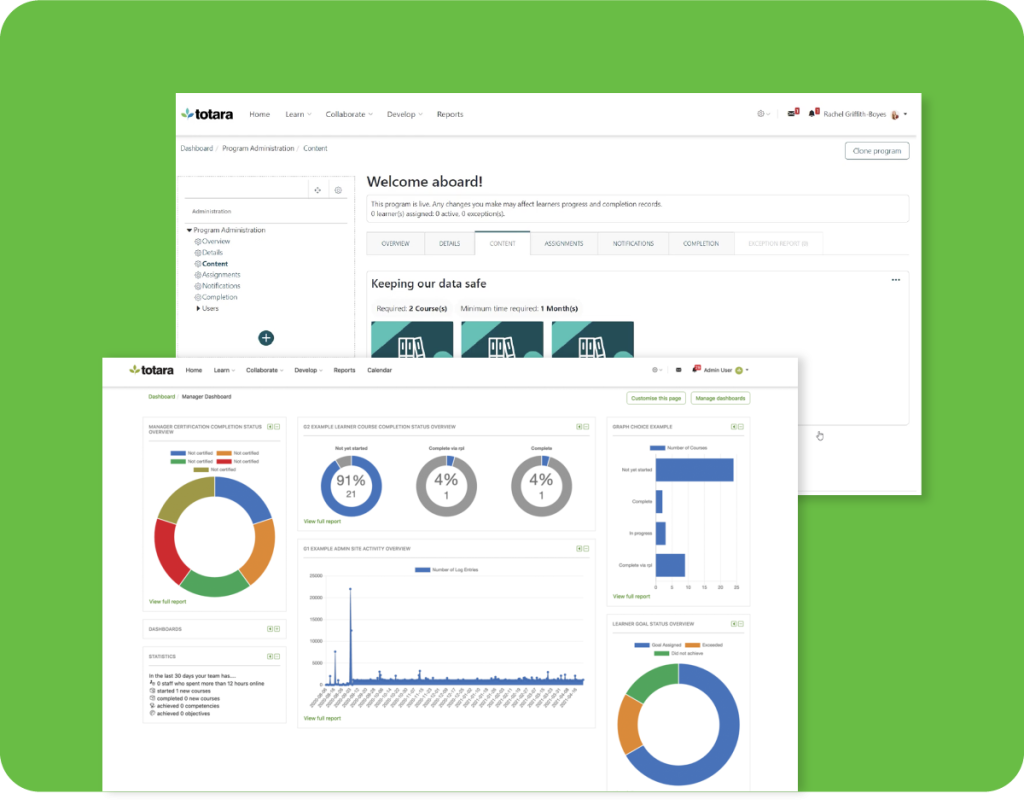
A custom software developer, like Synegen, can build report guidelines and structures, which put valuable information in the hands of decision-makers when they need it. This makes it easier to dig into a hunch, tackle a one-off need, or respond to an ad hoc request.
Searchable and Filterable Views
When you need to zoom in on specifics, like learners who are overdue for a data privacy course, or certificates set to expire this month, the ability to easily filter down and drill into the details makes all the difference.
The ability to shift from a high-level view to precise, targeted insights ensures nothing slips between the cracks.
Scheduled Reports
The best custom LMS features automatically generate reports based on a schedule you dictate. You can set them to run weekly, monthly, or ahead of audit cycles, delivering up-to-date insights automatically to anyone who needs to stay in the loop.
Perfect for recurring updates or leadership reviews, you can customize who will receive reports. This way, you can better manage internal alignment, goal-setting, and compliance tracking.
Dashboards
Tailored dashboards put the information most important to you front and center. Instead of hunting through different reports, you get a focused, real-time view of key compliance metrics, alerts, and statuses in one place.
Naturally, different departments have different priorities – the most powerful dashboards can be customized for different roles or departments, so managers and admins have a dedicated dashboard to see what matters most to them.
Recordkeeping
Secure recordkeeping is essential for compliance. A custom platform can ensure your organization meets local, state, or federal data protection requirements.
You can implement data encryption, set user permission levels, and keep your system’s security certifications up to date.
A West Coast Health Provider needed a way to manage Protected Health Information (PHI) confidentiality, HIPAA compliance, and generate custom reports. After learning there wasn’t a SaaS product that could effectively manage all three necessities, they decided to partner with Synegen. Synegen built a customized web application that is fully compliant with PHI standards and HIPAA regulations across multiple providers and data sources.
The Health Provider’s information is consolidated by demographics, appointments, and authorizations, meaning the right team members have access to the full context, making it easier to coordinate care and make stronger decisions.
Automated Corporate Compliance Training at Scale
As your organization grows, manual learning and training management become unsustainable.
Automation takes the tedious, time-consuming work out of corporate compliance management. From automatic course assignments to email reminders and renewal notifications, your compliance tasks can be handled without constant oversight.
HR System Integration
Cross-platform integrations to other apps and platforms are essential for learning management systems. One critical integration, in particular, for corporate compliance training is the connection between your LMS and Human Resources Information System (HRIS).
A strong platform connection ensures information is automatically aligned with real-time changes in your workforce. New hires? Role changes? Department transfers? Your compliance training platform can trigger learning automatically based on predefined rules.
No one slips through the cracks, and no admin time is wasted on manual assignment.
Audience Rules
When managing a large workforce, you’ll likely need an intelligent way to segment employees and assign training.
Dynamic audience rules let you automatically group people based on attributes like job role, location, business unit, or risk exposure, and then assign training.
For example, every manager in a regulated region can receive updated anti-bribery training without you having to manually manage the list. You’re in the driver’s seat. you can define rules and groups your way. This makes it easier to manage your organization and varying sets of employees.
Recertification Reminders
You can’t always count on your staff to remember when their licenses and certifications are set to expire – they have tasks and responsibilities of their own! Automated reminders keep businesses compliant. You can reduce manual oversight by setting a recurring notification timeline.
Automating recertification reminders notifies learners before certifications expire, and escalation paths ensure overdue items don’t go unnoticed. Plus, you can set who gets alerted, such as direct managers, the department head, HR – whatever your organization prefers!
This system ensures you stay ahead of lapses without needing to micromanage deadlines.
Automatic Content Updates
Compliance and regulations are constantly changing. When local, state, or federal requirements update, it’s important to get information to your team as soon as possible. This greatly reduces risk of noncompliance, service level agreement violations, and outdated policies.
Once you update your resources, course catalogue, and course content, your LMS for compliance should automatically deploy the changes to all necessary users. The system will weigh your user roles, groups, and system settings to assign the right content to the right users.
Placing the Right Corporate Compliance Training in Front of the Right Learner
Not every employee needs the same corporate compliance training. Roles, responsibilities, risk exposure, and required knowledge can vary widely across an organization. A one-size-fits-all model just won’t cut it.
Assigning curriculum based on each person’s role, level of responsibility, and regulatory exposure avoids wasting time on irrelevant content. It ensures employees receive only what’s essential to stay compliant.
Skills Frameworks
Participating in irrelevant training not only leads to low engagement but also wastes valuable time that employees could be spending on their core responsibilities.
An effective way to solve this is the use of skills training and tracking.
You can identify key compliance requirements for each role within your organization and map out key skills (the knowledge and behaviors) an employee would need to satisfy those requirements. Once competencies are identified, you can map them to certain training activities within your LMS.
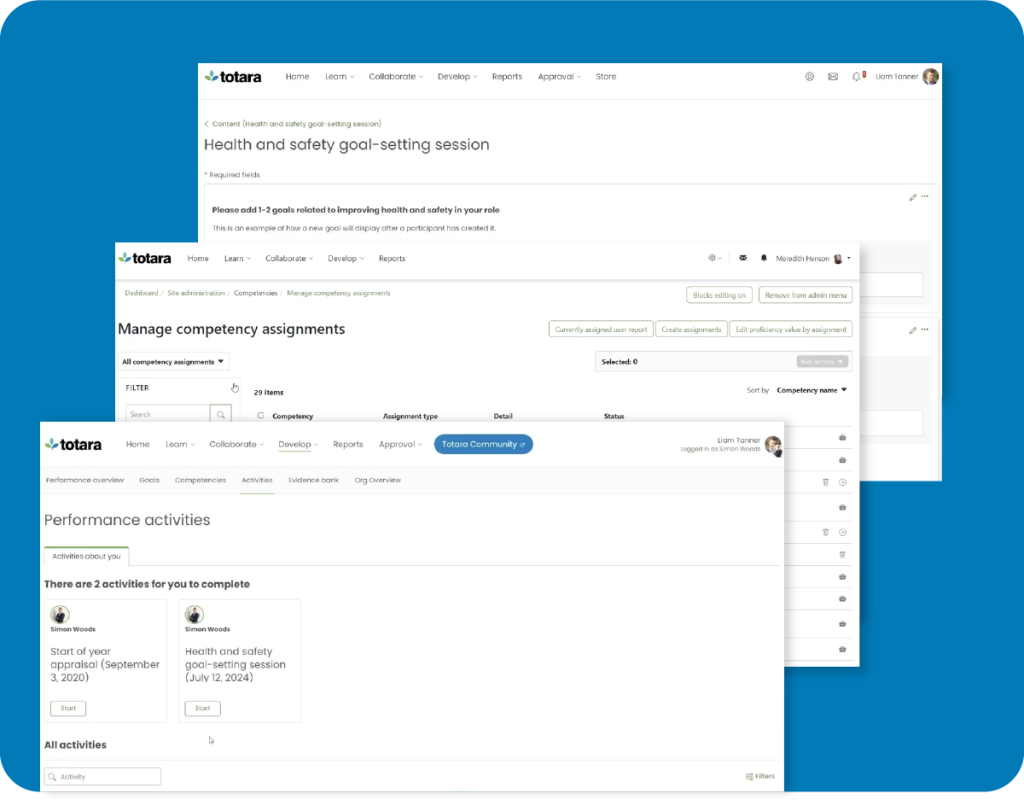
In Totara, a world-class enterprise LMS platform, skills can also be tracked and reported on, showing you the expertise your team has mastered or highlighting where they need more attention.
Learning Pathways
Some compliance courses are necessary for every member of your team to review. Others are important for specific teams. You can set workflows and enrollment parameters for OSHA courses, HR training, conflict resolution, and more.
Custom learning pathways boost engagement and participation by exposing learners to the courses that affect their day-to-day. Plus, your LMS can bundle and deploy learning sequences based on bespoke settings, such as job title or prior course completions. This puts learners in front of the appropriate courses – without the need to manually build pathways individually.
Adaptive Learning
While traditional learning paths rely on predefined content sequences, adaptive learning can take it a step further, tailoring the experience in real time based on each learner’s performance, role, and existing knowledge.
By using data and learner feedback, adaptive systems adjust content difficulty, skip over what someone already knows, and focus more time on areas where they need reinforcement. This reduces training fatigue and helps employees progress faster, without compromising compliance standards.
Adaptive learning is beneficial in environments where foundational knowledge varies across the workforce, or where an up-to-date understanding of complex regulations is critical. It ensures that each employee gets a learning experience that’s both efficient and relevant and ultimately more effective.
Assigning compliance training based on each person’s role, level of responsibility, and regulatory exposure avoids wasting time on irrelevant content. It ensures employees receive only what’s essential to stay compliant.
Ready to Simplify Corporate Compliance Training?
Corporate compliance training is non-negotiable, but it doesn’t have to be a headache.
If you’re trapped by the limitations of SaaS products, custom LMS development from Synegen can help you build effective learning environments that boost engagement and adherence.
We take a prescriptive approach, identifying your challenges and biggest goals, then collaborating with end users to build a highly integrated, automated system that eliminates the stress of training management. Companies just like yours have more freedom to develop their workforce their way.
Book a call with our team of experts, and we’ll help you build a comprehensive solution to manage audiences, automate certification and notification, report on progress, and integrate your tech stack.
Corporate Compliance Training FAQs
How do I choose an LMS for compliance training?
The best LMS for your team depends on the regulatory requirements that govern your organization. For instance, HIPAA, OSHA, or government data protection standards will shape the features you need most. Look for a platform that prioritizes visibility into training progress, automation of administrative tasks, and personalization of content by role.
If off-the-shelf solutions can’t meet your team’s specific needs, a custom-built LMS is worth looking into.
How do I scale my corporate compliance training program?
Automated features will have the largest impact. Integrations that trigger based on specific rules, dynamic audience rules, and automated reminders and content updates will keep your compliance program current as your organization grows.
Get Insights Sent Straight to Your Inbox
Related Content