
5 Key Use Cases for AI in Learning and Development
AI in learning and development is reshaping employee training. These tools help teams create content faster, personalize learning experiences, and align skills with business goals. Learn how L&D leaders are using AI today and what to consider for a successful implementation.

June 3, 2026
AI has quickly become one of the most talked-about topics in learning and development. It’s a major topic at industry conferences, featured on nearly every learning management system (LMS) vendor’s website, and a frequent point of discussion across the L&D space.
How businesses are integrating AI tools varies. Some have fully embraced it, and others are approaching it with caution. One thing is clear: AI is changing how learning and development teams operate. The momentum is only building.
According to research from eLearning Industry, 87% of teams polled already use AI, while 2% have no adoption plans. Even more, 88% value the time savings AI tools provide, while 72% anticipate personalized learning becoming the primary benefit. AI can do more than reduce tedious tasks; it can shape learning pathways and business outcomes in advanced and practical ways.
If you’re not already thinking about how AI can support your L&D efforts, now is the time to start.
The Most Common Ways L&D Teams Are Using AI
The best teams are already using AI in meaningful and productive ways. They’ve reshaped learning workflows by injecting AI into their L&D programs, which make targeted course recommendations, deliver personalized quizzes, and gather actionable insights for team leaders. The new capabilities of custom LMS software are transformative for growing workforces!
An important note: AI tools do not replace the necessity of humans – rather, they amplify what we already do. They help us work more efficiently, gather and interpret data, and form deeper connections with our teammates. It is the people across your organization who bring real value.
Keep reading to see five of the strongest applications of AI for learning and development:
1. Accelerated Content Creation
AI expedites course production by automatically generating videos, presentations, quizzes, and other training materials. Additionally, it can also analyze existing content to create course descriptions and summaries, assessments, and new lesson ideas.
This saves valuable time for instructional designers and trainers. Instead of focusing on tedious execution, they can shift their attention to higher-level strategic and creative tasks. With less time spent on ideation and production, your team can be more nimble when industry standards shift, connecting users with updated information sooner.
2. Adaptive Content Recommendation
AI-powered recommendation engines help personalize user experience and learner journeys. These tools analyze user behavior, preferences, performance data, skills gaps, and even information from tools like personality assessments. AI can suggest the most relevant courses and resources.
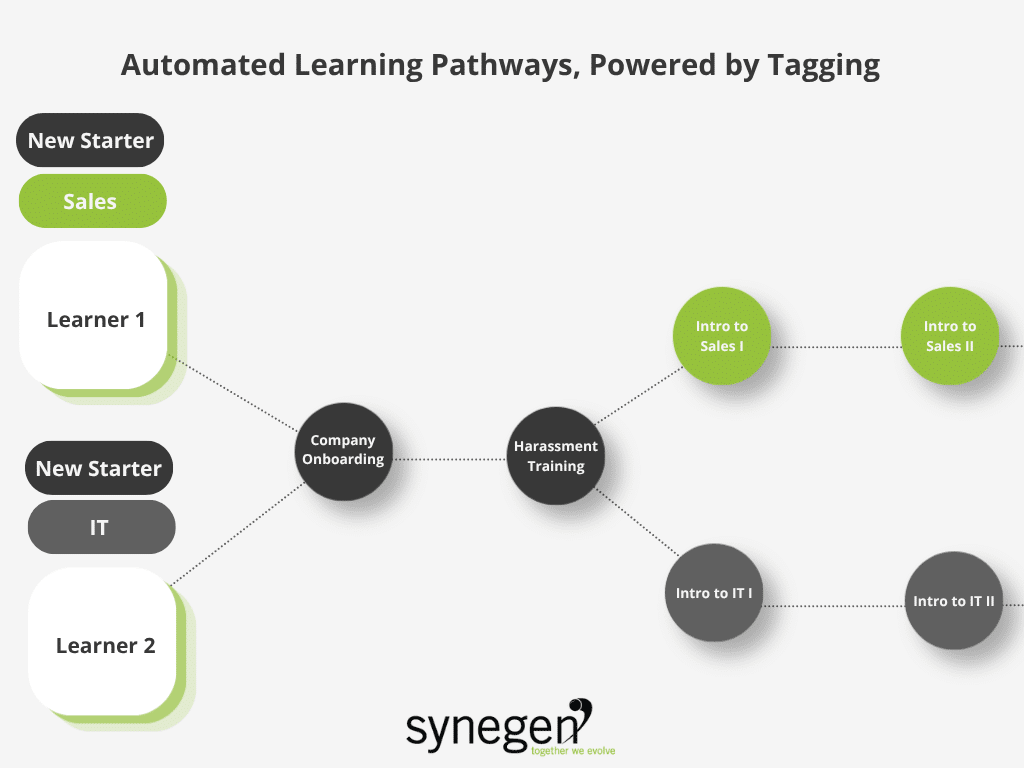
These recommendations evolve as the learner progresses, aligning learning experiences with both individual goals and organizational priorities. Additionally, the best LMS platforms utilize machine learning: the more your team uses the platform, the smarter it gets. Recommendations will evolve right alongside your growing team.
3. AI-Powered Coaching
Access to personalized learning has a tremendous impact on employee growth. But oftentimes, it gets left on the wayside due to managers not having the bandwidth to provide consistent support.
AI coaching offers a scalable alternative.
Through performance and behavioral data analysis, AI tools can provide ongoing, personalized guidance. For example, you can introduce informal knowledge checks to reinforce learning.
Even more, platforms like Totara are now incorporating AI tools that assist in setting SMART Goals (Specific, Measurable, Achievable, Relevant, Time-bound) for learners.
This structure ensures employee development plans are not only aligned with organizational priorities but also dynamically adapt as employee skills evolve. Now, organizations can deliver consistent coaching across their workforce.
Not sure what to track? Here are 35 LMS training metrics to get started.
4. Dynamic Skills Alignment
The skills your organization defines: data analysis, project management, or graphic design, for example, not only connect learners with appropriate courses. They highlight organizational strengths and opportunities.
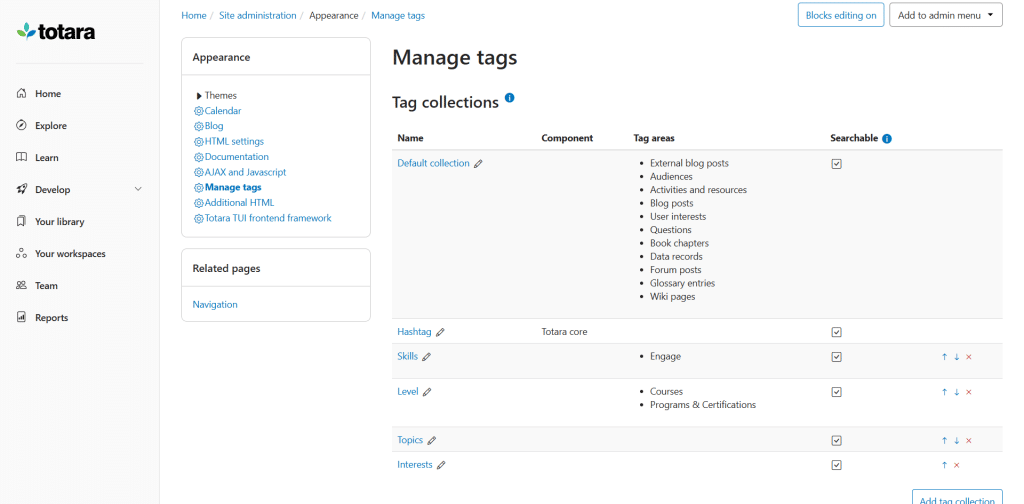
As more organizations move from role-based to skills-based learning models, an AI-powered LMS can help close the gap between current employee skills and future needs.
In a flash, AI can assess individual capabilities and connect employees with the right learning opportunities. This not only helps bridge skill gaps but also strengthens long-term career development and workforce planning.
5. Deeper Analytics and Insights
Tags can do more than organize and distribute courses. The best L&D teams are translating large volumes of learning data into actionable tasks by using them as filters in reports.
Not only does this standardize information and labeling across the entire platform, but metadata tags also help teams identify trends, measure impact, uncover skill gaps, and optimize learning paths.
AI tools take reporting to the level, instantly gathering test results, completions, engagement, and content performance. Additionally, they further reduce friction by automating reporting, visualizing patterns, and supporting more inclusive and equitable access to development opportunities.
These tweaks in organization and reporting are small and easy to manage – yet the impact is huge: swifter reaction times, stronger insights, and improved learning experiences!
Key Considerations for Implementation
AI offers powerful opportunities for L&D, but as with any new technology, success depends on thoughtful planning and execution. Here are five key areas to consider:
Data Readiness
Before introducing AI tools, evaluate the quality of your data. Consider where the AI will pull information from, such as your CRM, HRIS, performance management tools, and other systems.
Be sure your data is accurate, current, and complete. Gaps or inconsistencies can lead to unreliable results. To deliver meaningful insights and personalized learning, AI needs a full picture that includes learning history, performance metrics, skill profiles, and development goals.
A custom development team, like Synegen, can help with data migration, AI implementation, and cross-platform integrations. When engaging with developers, be sure to evaluate their approach to AI use.
The best custom developers mandate a “human-in-the-loop” policy when introducing AI tools. This requires all AI-powered materials to be reviewed, fact-checked, edited, and approved by an internal expert before deployment. Whether human-made or AI-generated, a content review process never hurts!
AI Ethics and Privacy
Introducing AI tools to an environment with sensitive employee and client data is a recipe for disaster without the right protections. Whether in highly-regulated industries, like government and healthcare, or a growing enterprise corporation, data privacy is the top priority.
Here’s a tip: before you introduce AI to your LMS, your custom web developer can help ensure necessary protections are set. For instance, they can set an enterprise API key with a 3rd-party generative AI provider. This secures your information, ensuring your developer and LMS cannot own or train a proprietary AI model on your company’s data.
Plus, an AI implementation expert can help you and your stakeholders outline what data is and is not collected, how it will be used, and why. Wherever possible, personally identifiable information should be anonymized to maintain compliance with data protection regulations and protect individual privacy.
These safeguards can help ensure your team upholds good data and AI practices.
Change Management
A successful AI rollout requires more than simply choosing the right tools; it means managing a cultural shift.
Internal education is key! Across your organization, teams should understand the AI tools you plan to introduce, how they work, and best practices. Upskilling in data literacy and AI fundamentals will be important across all roles.
You should also embrace a spirit of experimentalism! Encourage testing, learning from real-world use cases, and sharing insights across teams. This will help your team “level up” their AI knowledge quicker.
Fostering a collaborative, learning-oriented environment will make it easier for teams to adopt AI with confidence and contribute to meaningful results.
Return On Investment and Use Case Prioritization
Not every AI initiative will deliver equal value, so it’s important to assess which use cases offer the greatest return on investment (ROI). Prioritize projects that balance feasibility with clear financial or operational impact.
Will the AI solution streamline processes, reduce costs, improve learning outcomes, or free up valuable time for your teams? Consider starting with high-impact, lower-complexity use cases to demonstrate quick wins.
Measuring the ROI of AI adoption shouldn’t only be about immediate savings. Each implementation should align with broader business goals and deliver measurable, long-term value.
Efficacy and Continuous Evaluation
AI tools are only as valuable as the outcomes they produce. Early chatbot implementations, for example, offered limited accuracy and impact, but have quickly improved through continuous refinement. The same will be true for AI in learning and development.
It’s essential to establish methods for measuring how effectively AI solutions are performing against their intended goals. Are recommendations actually helpful? Are predictions accurate? Are learning outcomes improving?
Build feedback loops and performance metrics into your AI strategy to monitor efficacy over time. This ensures your AI initiatives stay aligned with evolving business needs and continue to deliver meaningful results as the technology matures.
Leveraging AI for More Efficient Learning and Development
AI is no longer a distant concept in learning and development. It’s here, and it’s reshaping how teams create, deliver, and measure training.
An AI-powered learning management system can introduce practicality and thoughtfulness to internal processes. This makes it easier to deliver meaningful impact. Organizations that embrace AI with purpose will be better-equipped to support their workforce and meet the demands of an ever-changing business landscape.
A custom software developer can help your team introduce new technologies thoughtfully, improve your strategies, and continuously evaluate results as the technology evolves.
Are you ready to improve learning and development across your entire organization? Synegen can help; we custom-build technology ecosystems that help enterprise businesses inject strategy and business results into their learning. Book a call with our team of experts to get started today!
AI in Learning and Development FAQs
1. How is AI used in an LMS?
An AI learning management system can do several things traditional platforms can’t. It can recommend courses based on each learner’s behavior, preferences, and performance, and those suggestions update as the learner progresses. It can automate content creation, like quizzes, summaries, and assessments. Even more, it can set and track SMART goals, provide coaching at scale, and turn raw data into actionable reports.
AI can shift an LMS from a content library into a dynamic learning engine!
2. How can AI help employee training?
AI can help at every stage of training: before, during, and after.
Before: it can identify skill gaps and connect employees with the right learning opportunities.
During: it can personalize the experience in real time by adjusting recommendations as the learner progresses.
After: it can measure outcomes, track engagement, and collect insights for L&D leaders.
Overall, it reduces the burden on managers by providing consistent and scalable coaching that doesn’t reduce anyone’s bandwidth.
Get Insights Sent Straight to Your Inbox
Related Content