
Learning that’s unattached to LMS data creates a vacuum.
Too often, organizations rely on multiple systems to manage employees, customers, business operations, performance, certifications, and professional development. But learning, and the platforms they utilize, are frequently treated as a separate entity. This not only creates manual tasks and information silos, but also limits business insights and decision-making.
Integrating data from different systems can fundamentally change experiences not just for learners, but for everyone touching your business.
When learning platforms connect to the broader technology ecosystem, organizations can build a more complete picture of each learner, deliver more relevant learning experiences, and reduce administrative effort. This combination improves learning outcomes.
From Isolated to Connected Learning
A traditional learning management system (LMS) primarily knows what happens inside the LMS: which courses a user is enrolled in, what they completed, their assessment scores, and their certifications.
This information, however, only represents a fraction of a learner’s story.
Think about an employee who has recently moved into a management position. An LMS may know that the employee completed several leadership courses. However, an HR system may know that the employee was promoted, a performance management system may contain their development goals, and a talent management platform may identify leadership as a critical competency for their role.
Connecting these systems allows the organization to combine those pieces of information.
This pushes organizations beyond measuring the amount of training that’s been completed. They can track what a user needs to learn based on their role, responsibilities, performance, goals, and career path.
1. More Personalized Learning Experiences
One of the greatest benefits of LMS data integration is the ability to personalize learning.
Learning recommendations can be informed by information outside of the LMS, including:
- Role and department
- Skills and competencies
- Performance goals
- Previous training
- Certifications
- Career applications
- Projects and responsibilities
- Assessment results
- Business or organizational priorities
For example, a newly promoted supervisor could automatically receive training aligned with the tools and skills associated with their current project.
This is a shift away from one-size-fits-all training toward learning that is relevant to the individual.
But relevance matters. When learners understand why a course is important to their current role or future goals, they are more likely to engage with the content and apply what they learn.
2. Delivering Learning at the Right Time
LMS data integration also makes it possible to move from simply delivering learning to delivering relevant courses at the perfect time.
Imagine an organization that uses an HR system to track employee positions. When someone changes roles, that event can automatically trigger the appropriate learning requirement in the LMS.
Similarly, a new assignment, certification requirement, compliance obligation, or organizational change could initiate a learning recommendation.
Instead of requiring an administrator to manually identify the change and assign training, the systems can work together. The result is a responsive and intuitive learning environment. Learners access the right information when it’s most needed. No more waiting weeks or months after the event that created the need for training.
3. Reducing Administrative Burden
Data integration isn’t only about improving the learner experience. It can also dramatically reduce administrative work. Without integrations, learning administrators may spend significant amounts of time:
- Importing users
- Updating employee information
- Assigning courses
- Maintaining organizational structures
- Tracking certifications
- Reconciling completion records
- Producing reports
- Updating learning requirements
Automated integrations can eliminate many of these repetitive activities.
For instance, when an employee is hired, their information can automatically flow from the HR system into the LMS. When their department or role changes, the LMS can update their learning requirements. If they leave the organization, their access can automatically be adjusted. This eliminates many manual LMS data management tasks, allowing teams to focus on higher-value activities.
4. Creating a Complete Picture of Learning for EMS
The ability to connect learning to business performance is the biggest benefit of LMS data integration.
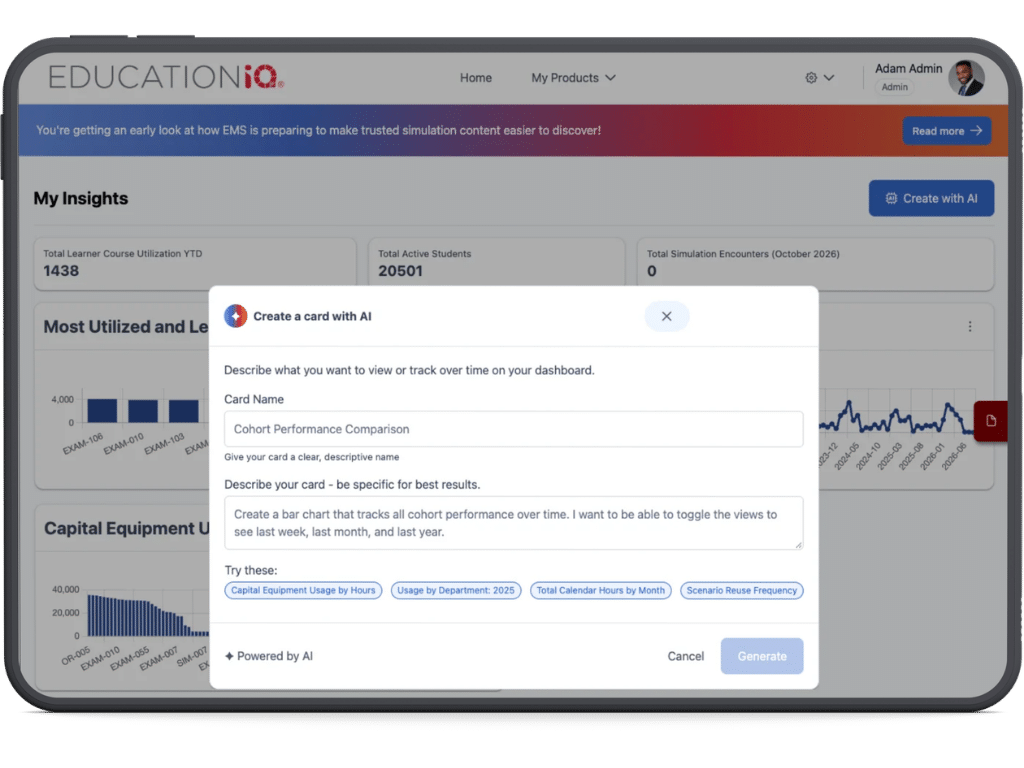
Education Management Solutions (EMS) is an enterprise simulation technology and software company. They specialize in healthcare, serving various schools and hospitals to enrich their training programs. 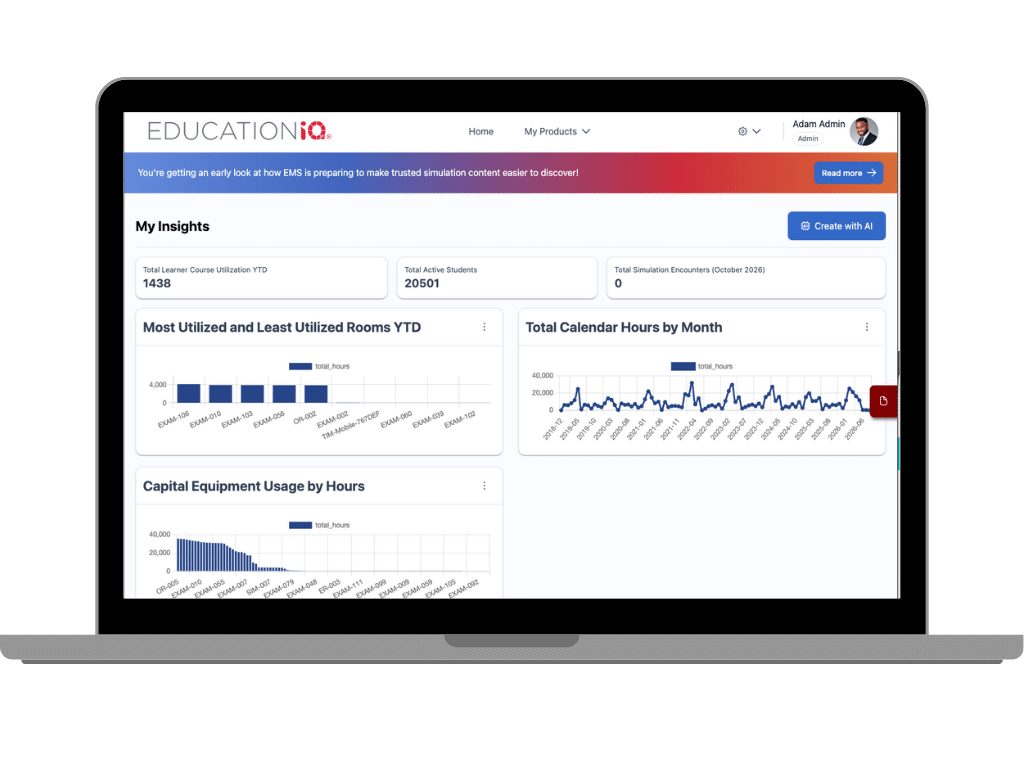 We worked with them to consolidate their technology stack and data management workflows, then put the information into a workable format. Our development team built administrative, learner, and client portals, integrating data, tools, and predictive AI analytics.
Since data now aggregates in one place, EMS can see the full picture of learning. Their third-party systems, HRIS, SIS, eCommerce, equipment data, and enrollment data are all available in their LMS. With everything consolidated, they can track learner progress more easily, identify program strengths, and deliver curated learning experiences.
Now the EMS team is more proactive in learning management, setting data-backed goals and analyzing results with powerful tools.
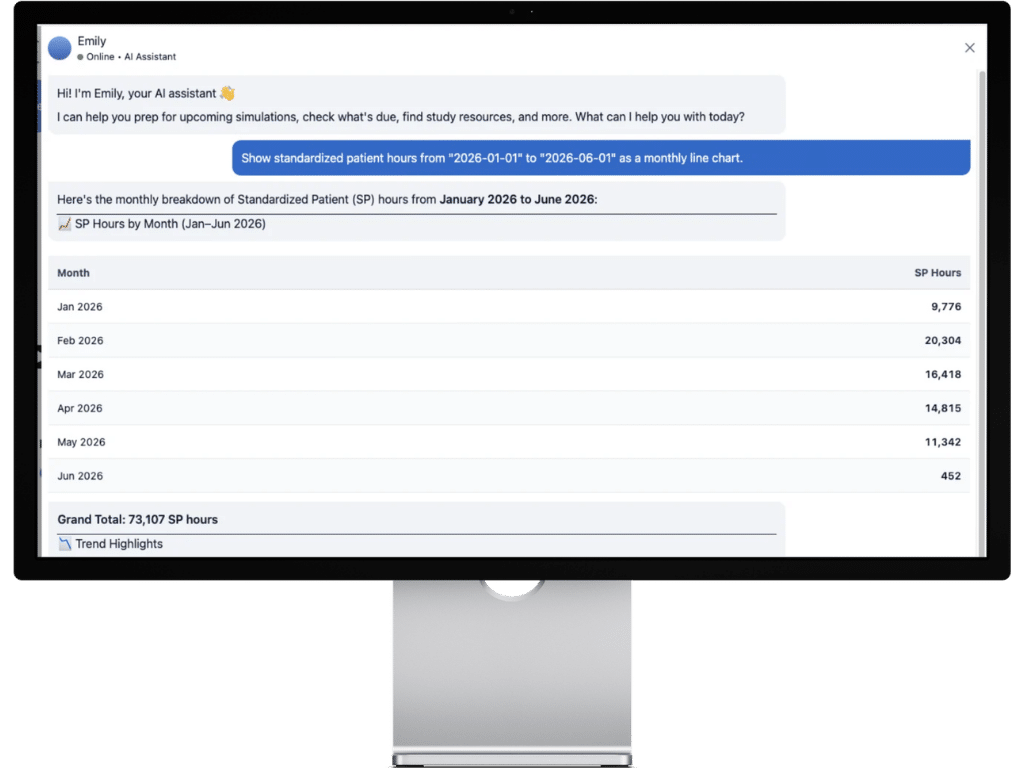
Even more, the new EMS platform is built to grow. Their AI assistant, Emily, drives their product and career-path guidance by sitting on top of a centralized LMS data foundation. Information is collected through xAPI connections, then powers automated test scoring, notes, learning recommendations, and early-risk indicators.
Their analytics and measurement have shifted away from mere reporting. With prompting, managers can quickly identify high performers, who needs a nudge, and plan for the next learning cycle. This happens in just a few clicks.
Now EMS has the foundation to offer more services without sacrificing quality learning or decisions. As more schools, hospitals, and users join, the platform remains reliable and intelligent.
Strong data connections, analysis, and AI technology ensure learning analytics are meaningful and applicable to business decisions.
5. Improving Skills Visibility
Cross-platform data helps businesses highlight what skills they have today, so they can be proactive about skills development for tomorrow.
Organizational capabilities are clearest when cross-system information is consolidated in your LMS.
For instance, an organization may identify a shortage of employees with a particular technical skill. Rather than simply hiring externally, the organization can identify existing employees who are close to developing that skill and recommend targeted learning.
This creates the most powerful connection between learning, talent development, and workforce planning.
Learning can be more than a compliance or employee-development function; it can become your strategic mechanism for building wider organizational capability.
6. Supporting Continuous Learning
Traditional training often revolves around courses and their completion. Systems and data connections enable organizations to move beyond this model. Readily available information makes businesses agile and proactive towards learning and development.
For instance, a performance review might identify a development opportunity. That opportunity could generate a learning recommendation. The learner completes the training and applies the new skill. Performance data can then provide feedback about whether the intervention was effective. Then, the cycle continues.
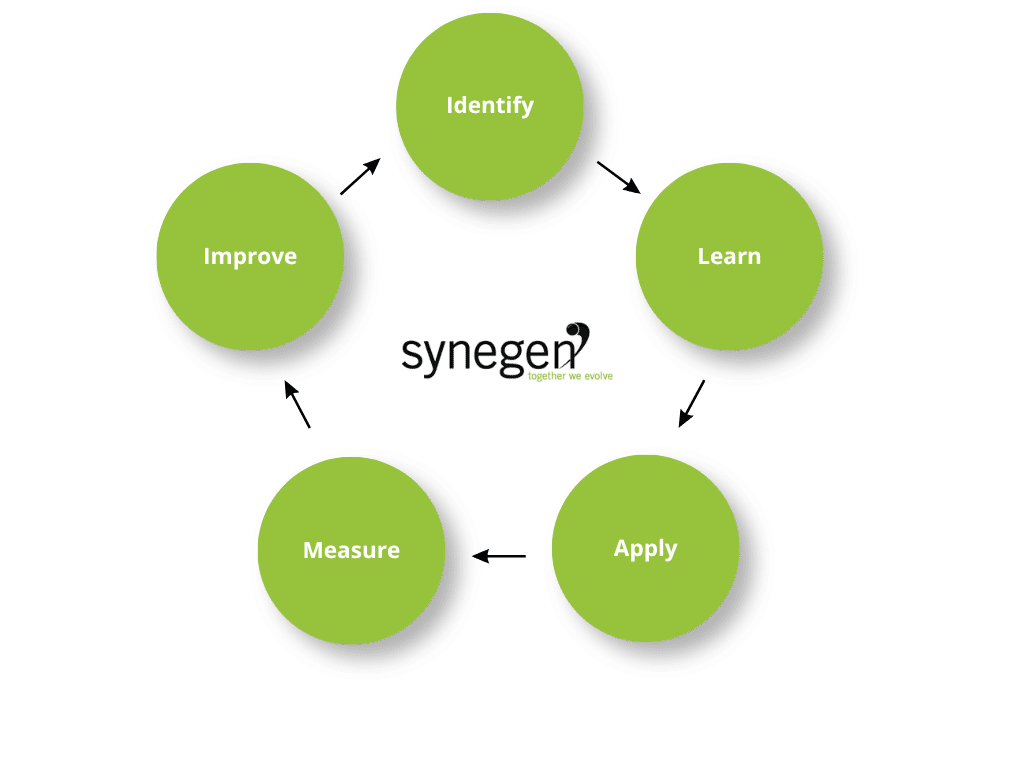
This creates a continuous learning loop, eliminating the categorization of learning as an isolated event.
7. Making LMS Data More Proactive
Your LMS’s data can also enable organizations to anticipate learning needs instead of reacting to them.
If an organization knows that an employee is moving into a new role in the near future, the learning platform can begin preparing that employee before the transition occurs.
 Similarly, if an organization identifies an emerging skill gap, it can proactively recommend learning before the gap becomes a business problem. This is particularly powerful when combined with analytics and AI. Instead of waiting for someone to search for a course, the learning ecosystem can identify potential needs and recommend the next best learning opportunity.
8. Breaking Down Technology Silos
Most organizations accumulate technology over time. Workflows deteriorate when systems become outdated or don’t properly communicate. Business processes will always be spread across different platforms: HR has its systems, learning owns the LMS, talent management is on another platform, and business operations may use entirely different applications.
An LMS doesn’t have to be at the center of your operations. But it should have access to the information that enables learning to make the most meaningful impacts on organizations. This way, the LMS remains the system of record for all learning activities, while other platforms provide contextual information that makes learning even more meaningful. This approach can also reduce duplicate data points and improve data consistency across an organization.
Just like your business, reporting- the metrics that matter- will pivot and evolve. The right technology ecosystem and data management process will keep your team on the forefront of shifting priorities. No more knee-jerk reactions.
9. Better Learning Decisions Through Better LMS Data
Ultimately, better decisions require better information. Direct managers and learning leaders need to understand, or have access to:
- Which learning skills are currently developing
- The biggest skill gaps in learning
- The most effective learning programs
- Which employees require additional support
- Which courses are associated with improved performance
- Where the organization should invest its learning resources next
Integrated data provides the necessary context to make decisions. Without it, you’re flying blind. When you pivot from simply recording and sharing learning activities and start connecting learning to real business outcomes, your development programs can actually start turning the dial on business goals and results.
The Future of Learning is Connected
Delivering a high-quality employee development program isn’t simply about having better courses or a more sophisticated LMS. Its purpose should be to create an environment where learning is connected to learners, their work, and your wider organization.
Properly integrated and managed LMS data makes this possible.
When HR data, performance information, skills, business processes, learning activity, and other relevant information actually work together, organizations can create learning experiences that are more personalized, timely, and closely aligned with business needs.
But platforms shouldn’t be integrated simply for the sake of integration. Tie each data point and action to a specific business process or learning goal. This makes data actionable while improving information on specific learners. The more you understand about learners, the better learning relevance your organization can provide.
Learning is only as valuable as the data behind it.
Are you ready to put your LMS data to work? Synegen leads in streamlining enterprise data management, maximizing learning programs, and building integrated business technology landscapes. Book a call with our team of experts today!